China’s jewelry sales reached approximately CNY 180 billion ($25.88 billion) in 2007, representing growth of about CNY 20 billion ($2.87 billion) a year from 2005, according to a report by research company Research And Markets (R&M.)
R&M added the ‘China Gold & Silver Jewelry Market Channel Report, 2007-2008’ to its research listings given the recent growth of the market.
Since 2003, the retail price index of China's gold and silver jewelry goods has risen continuously, at a higher rate than all other commodities, the report explained.
In 2007, China’s jewelry imports grew 35 percent to $6.2 billion, and exports grew 16.8 percent to $8 billion, M&R reported adding that sales of gold and silver jewelry kept a good momentum in the first quarter of 2008.
“That indicates China's jewelry market is increasingly prosperous and the import and export trade is continuously growing,” the report said. “China's position as one of world's main jewelry manufacturers and consumers has been further strengthened.”
By year-end, there were more than 10,000 jewelry retailers on mainland China, the majority of which were small outlets without independent brands and competitiveness, M&R said.
“So far, China's jewelry industry has become the third largest consumer hot spot preceded only by real estate and automobile industry,” the report explained.
M&R said statistics in the report were based upon those provided by the Gems & Jewelry Trade Association of China, the China Gold Association, the Shanghai Diamond Exchange, the Ministry of Commerce, the National Bureaus of Statistics and statistics bureaus at provincial or municipal level.
Source: diamonds
Showing posts with label China. Show all posts
Showing posts with label China. Show all posts
May 27, 2008


May 11, 2008
Jewelry Shanghai: Visitor Numbers Down but Quality Up
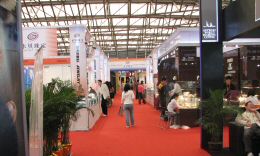
Jewelry Shanghai 2008 concluded Sunday after a weekend-long exhibition that started May 8 at the Shanghai New international Expo Center. On the last day of the show, hours before companies began packing up their booths, foot-traffic was light, mostly made up of members of the public, with a few trade members here and there.
Prominent designs included gold jewelry set with small size diamonds, with a good deal of jade, amber, pearls and precious stone pieces all around. Diamantaires noted good sales of SI+ / D-G goods.
Jane Kao of Taipei, Taiwan-based jewelry wholesale company Bennie Wang Jewelry, exhibiting for the first time at Jewelry Shanghai, remarked that the visitor numbers were much lower than she had expected and that most of the attendees she saw were consumers. The company sells its own designs to retailers, and, although Kao says that the industry members she did meet were interested, sales were “not good.”
“We are mostly here to promote our company and to test if people in Shanghai like our product. We are different from others who sell mass-produced items. Ours are all designed in-house, in small numbers. Nevertheless, I expected to see more people here.” Kao commented that a recent downturn in the Shanghai stock market, as well as overall concern about the economy kept people away.
Anna Tchapovshaia, of Botswana Diamonds, a brand manufactured by DTC Botswana Sightholder DIA Holdings and distributed in China by Trinity Diamond, echoed the sentiment, that most of the attendees they saw were consumers, not trade members. However, despite this she says that the brand is there almost purely for the PR opportunity, and “in terms of this, we’re happy with the show.”
Official visitor numbers were not made available from show organizers.
Raymond Cohen, sales executive of Antwerp-based DTC Sightholder Tache Company NV, emphasized that the relatively sparse crowds at the show didn’t faze him. “Numbers are down, definitely, but the quality of buyers is up,” he says.
Cohen also gave some advice to foreign companies exhibiting in China. “Chinese buyers want a large range of goods. I think a lot of companies come here with a very specific set of goods, that people here may or may not want, but you can’t do that.” When asked how the show is going for him, he said that it is going very well. “It’s simple,” Cohen says. “If you have the goods, it’s fine; if not, it’s not good.” He said most buyers had been interested in everything but SI goods.
Raj Impex Shanghai Limited is a company that has been selling in Shanghai for approximately two years now and that specializes in small goods below 0.30 carat. “Mac,” a sales executive, echoed the complaints of other exhibitors that people were simply not buying. Those that had been buying were mostly Chinese, Japanese and Korean buyers.
He stressed that the show is very small in comparison to others in the region, such as Hong Kong, but that the event is a good opportunity to meet and gain new customers from cities in the Shanghai area that may not come to Hong Kong.
Show organizers said that there were 400 exhibiting companies from China, Hong Kong, India, Belgium, Israel, Taiwan and others. Shanghai, they say, makes up 20 percent of the Chinese jewelry industry’s total sales and is an important distribution and consolidating center for the country’s industry.
Source: idexonline
Apr 27, 2008
DMCC, Panyu, China to Promote Jewelry Trade
Dubai Multi Commodities Centre on Wednesday signed a Memorandum of Understanding with the People's Government of Panyu District, China, for increased cooperation towards mutual growth and the promotion of jewelry trade between both countries, with a special focus on diamonds and colored stones.
The MoU is in line with the recent visit of His Highness Sheikh Mohammed Bin Rashid Al Maktoum, vice-president and prime minister of the United Arab Emirates and Ruler of Dubai, to China to strengthen ties between the UAE and China.
Under the terms of the agreement, both parties will mutually promote the jewelry trade, with the intention of collectively developing a strong presence in international markets and establishing a global influence. This will be accomplished through the exchange of market expertise in jewelry design, training, business opportunities, and educational initiatives, in addition to facilitating the reciprocal operation of visiting jewelry trade delegations.
Led by Mr. Tan Ying-hua, party secretary of the Panyu People’s Government, the 11-member delegation from the Government of Panyu visited the DMCC offices, ahead of the signing of the MoU. Delegation officials from the Panyu People’s Government included the vice president of the Panyu Jewellery Manufacturers Association and the Jewellery and Diamond advisor to the Panyu Government. Ahmed bin Sulayem, executive chairman, DMCC, presented each member of the delegation with a Chinese version of His Highness Sheikh Mohammed’s book: “Royati – My Vision”
“Our MoU with DMCC … will enable us to explore the extensive scope of the emerging markets in the high growth economies of the Middle East," said Tan Ying-hua. "We aim to jointly create an environment conducive to business, and a solid platform for the exchange of knowledge. This will be of immense value to the diamond and gemstone traders between Panyu and Dubai, and will enhance opportunities for increasing jewelry trade volumes.”
DMCC and the Government of Panyu will form a four-member steering committee to assist in discussing the wider scope of the MoU. The MoU also seeks to encourage youth exchange programmes and establish cultural delegations in the fields of art and music, with the intention of promoting friendship between the two countries.
“DMCC is very pleased to enter into this cooperative relationship with the Government of Panyu, China, which will open up new avenues for strengthening trade links between two prominent economies," said Ahmed bin Sulayem, executive chairman, DMCC. "Panyu has rapidly emerged as the gem and jewellery capital of China. Through DMCC’s partnership with them, we are confident that we will see greater acceleration in jewellery trade between both countries.”
Panyu, a district of Guangzhou situated in the Guangdong province, accounts for more than a fifth of China’s export of gold and inlaid jewelry. Panyu has nearly 400 enterprises employing more than 70,000 workers within the jewelry trade. In 2007, the total value of domestic export was $1.32 billion. Panyu is also set to host the ninth International Coloured Gemstone Association Congress in 2009.

Seated Left to Right: Ahmed bin Sulayem, executive chairman, DMCC;
Tan Ying-hua, party secretary of the Panyu People’s Government at the MoU
signing ceremony between DMCC and the People's Government of Panyu District, China.
Source: jckonline
Feb 20, 2008
'Made in China' label may damage brand
More than two-thirds of luxury consumers say where goods are manufactured is important, a Unity Marketing survey shows, meaning that moving operations to another country to cut costs may damage a brand in the long run.
Luxury consumers, classified with an average age of 46.6 and an average income of $155,700, think quality goods are made in America, as well as in Italy, France and Germany.
China, however, is a country they associate with lower-quality goods, the survey shows.
"This is important because our survey shows that 80 percent of luxury consumers feel the association a luxury goods brand has with a particular country, like Chanel has with France or Gucci has with Italy, are integral to the perception of the brand," Unity Marketing President Pam Danziger said in a statement. "Nearly as many say they will pay more for luxury goods manufactured to exacting standards and in countries where manufacturing practices are high."
The survey, which polled 1,281 luxury consumers, also shows that the desire for products manufactured in certain countries increases with age.
Consumers ages 45 to 70 were most likely to hold definite opinions on countries having higher- or lower-quality merchandise.
"Younger consumers may have not had as much time to travel, study and form opinions on the countries of manufacture for their luxury goods," Danziger said. "This is a real opportunity for luxury marketers to educate their younger consumers about the company's insistence on holding the quality-bar high, regardless of the country they use to source their goods."
Source: nationaljewelernetwork
Luxury consumers, classified with an average age of 46.6 and an average income of $155,700, think quality goods are made in America, as well as in Italy, France and Germany.
China, however, is a country they associate with lower-quality goods, the survey shows.
"This is important because our survey shows that 80 percent of luxury consumers feel the association a luxury goods brand has with a particular country, like Chanel has with France or Gucci has with Italy, are integral to the perception of the brand," Unity Marketing President Pam Danziger said in a statement. "Nearly as many say they will pay more for luxury goods manufactured to exacting standards and in countries where manufacturing practices are high."
The survey, which polled 1,281 luxury consumers, also shows that the desire for products manufactured in certain countries increases with age.
Consumers ages 45 to 70 were most likely to hold definite opinions on countries having higher- or lower-quality merchandise.
"Younger consumers may have not had as much time to travel, study and form opinions on the countries of manufacture for their luxury goods," Danziger said. "This is a real opportunity for luxury marketers to educate their younger consumers about the company's insistence on holding the quality-bar high, regardless of the country they use to source their goods."
Source: nationaljewelernetwork
China gold jewelry demand surges 23%, over U.S.
China's demand for gold jumped 23 percent in 2007 as rising personal incomes helped it to race ahead of the U.S. to become the world's second-biggest market, the World Gold Council said.
Gold use in jewelry in China mainland rose to 302.2 metric tons last year, from 244.7 tons in 2006, Roland Wang, general manager of Greater China at the council, told reporters Tuesday in Shanghai. That compares with 558.2 tons in India, the biggest consumer, and 262.9 tons in the U.S.
Increased jewelry purchases by consumers in China and India, the world's fastest-growing major economies, may help to support the price of gold, which reached a record high of US$936.92 an ounce on Feb. 1. Bullion has risen for seven straight years.
The Shanghai Gold Exchange settled the contract details with HSBC Holdings Plc and Standard Chartered Plc, exchange Chairman Shen Xiangrong said at Tuesday's conference.
The People's Bank of China approved five foreign banks that have incorporated in China to become members of the exchange to act as market makers, Shen said in June last year.sk
Source: chinapost
Dec 5, 2007
Chinese gold jewelry demand jumps
Chinese demand for gold jewelry may increase by about 20 percent this year as rising personal incomes help the nation race ahead of the United States as the second-biggest market in the world, GFMS, a researcher, said.
Gold use in jewelry in China jumped 24 percent from a year earlier to 221 metric tons in the first nine months, a GFMS analyst, Veronica Han, said from Beijing on Monday, citing data compiled for the World Gold Council. That compares with 515 tons in India, the biggest consumer, and 165 tons in the United States.
Increased jewelry purchases by consumers in China and India may help to support the price of gold, which reached a 27-year high of $845.84 an ounce on Nov. 7 and is headed for its seventh annual gain.
"More economic development in China and a relatively higher savings ratio than that of India should in the long-term drive gold demand in China," Stephan Schlatter, the executive director for metals markets in Asia at UBS, said.
A stock market and property boom helped to raise disposable incomes among urban households in China by 13.2 percent in the first nine months of this year when adjusted for inflation. Retail sales rose by 18.1 percent in October from a year earlier, the fastest in eight years, the statistics bureau said Nov. 14.
"China is poised to become the world's second largest jewelry market for gold this year, overtaking the United States and coming in No. 2 behind India," Philip Klapwijk, the executive chairman of GFMS, said by phone from Parati, Brazil. "I would expect it to grow further" in 2008, he added.
"We expect gold use in China this year to greatly exceed last year's level, with rising standards of living and some policy changes to encourage gold holdings by the public," Hou Huimin, a vice president of the China Gold Association, said in early November. Hou did not give details.
Even "with less aggressive growth in the fourth quarter," Chinese sales of gold are expected to increase by about 20 percent in 2007, GFMS's Han said. The GFMS estimate of gold use in jewelry excludes supply from scrap.
China has increased minimum wages, expanded welfare payments and reduced interest-income tax to fatten the wallets of its 1.3 billion consumers, who have a growing taste for luxury items like cars and jewelry.
"Upgrading of the retail environment and greater product varieties" helped gold demand, Klapwijk said. "The Year of the Pig also helped." This year's lunar New Year, the Year of the Golden Pig, is deemed auspicious for gold purchases.
"Almost everything has gone right for gold jewelry demand to pick up," said Klapwijk. "You had a perfect environment."
Chinese buyers have not been deterred by a 24 percent gain in gold prices this year as a slumping dollar and surging oil prices fueled demand for an alternative investment and hedge against inflation. Bullion for immediate delivery traded at $791.04 an ounce in Singapore on Tuesday.
Higher prices have lifted shares of producers like Barrick Gold, Newmont Mining and Newcrest Mining.
"Our long-term view is positive on Chinese demand," Klapwijk said. Still, growth of gold use in jewelry in the fourth quarter may slow, and the pace may also slacken next year if monetary policies aimed at curbing inflation reduce the rate of economic expansion, he said.
Chinese economic growth may cool to 10.8 percent in 2008 from an estimated 11.4 percent this year as investment and export growth slows, economists from the State Information Center said.
China may continue to face inflationary pressure next year, and the central bank should raise key interest rates, according to a report published Monday, which forecast inflation at 4.5 percent for 2008 from 4.7 percent this year.
Source: iht
Subscribe to:
Posts (Atom)